
Notice: Function _load_textdomain_just_in_time was called incorrectly. Translation loading for the multisite-clone-duplicator domain was triggered too early. This is usually an indicator for some code in the plugin or theme running too early. Translations should be loaded at the init action or later. Please see Debugging in WordPress for more information. (This message was added in version 6.7.0.) in /home1/parmtmmy/public_html/blog/wp-includes/functions.php on line 6170
Polarization in the Maine Senate and House is increasing – democracyGPS

Polarization in the Maine Senate and House is increasing

November 20, 2022 — One discovery we made in the Maine Senate and House data is that between 2017 and 2022 average voting polarization in the Maine Senate and House has increased from 60% to almost 80%. Sadly, but unsurprisingly, over this period, the percentage of bipartisan votes, where most Democrats and Republicans vote together, decreased from 19% to 10%, and the percentage of polarized votes increased from 32% to 61%. Some, but not necessarily all, of this increase is due to Republican legislators starting to vote more unanimously (like their Democratic colleagues).
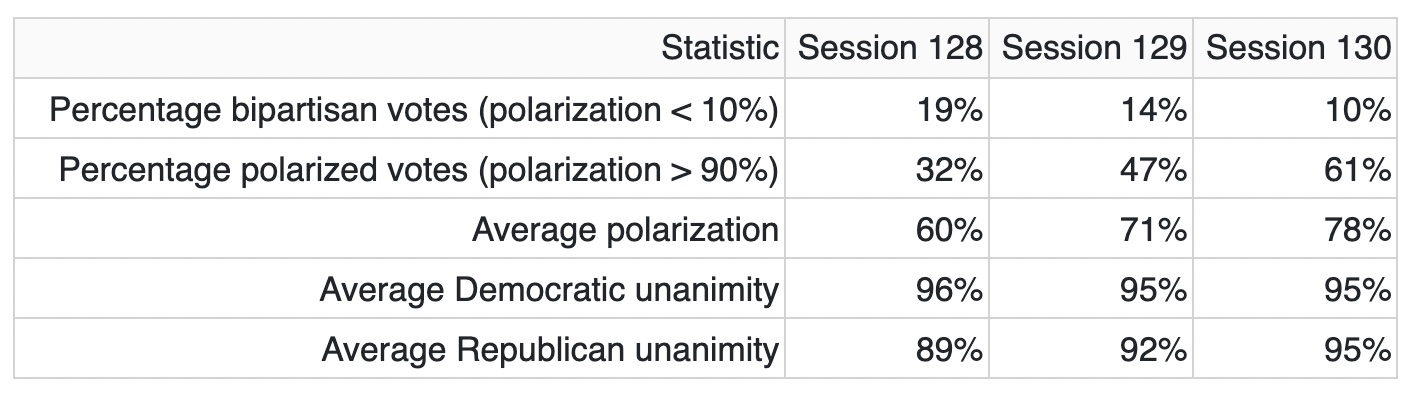
Increasing polarization in Maine Senate and House votes between 2017 and 2022 (sessions 128, 129, and 130)

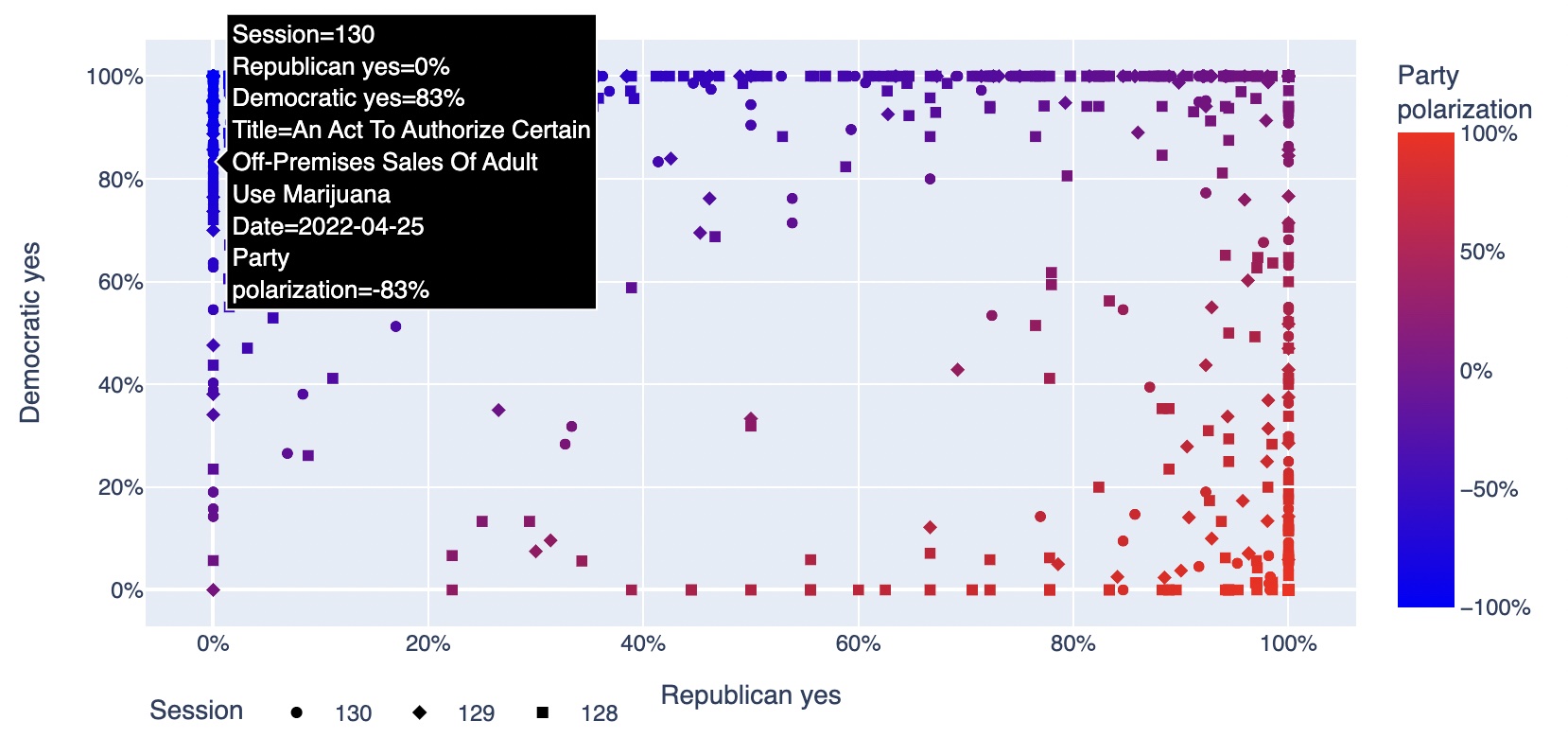
Our website (http://dash.democracygps.org) allows visitors to see for themselves which bills were most and least polarizing...
Author: Chris Krenn

Chris Krenn is a computational physicist and metallurgist working near San Francisco since 2001 and has been exploring electronic democracy systems since 2013. His goal is to help develop a non-partisan electronic democracy system that combines regular polling, voter education, and voter-chosen delegates to hold our representatives more accountable and to make our government more responsive. He has a B.S. from Yale and a Ph.D. from U.C. Berkeley.

Leave a Reply

Your email address will not be published. Required fields are marked *